


Security and Human Rights Monitor The Security and Human Rights Monitor (SHR Monitor) is a multifaceted platform that provides analysis on the work of the OSCE, as well as on security and human rights challenges stemming from the OSCE region and beyond.
20 March 2024
Crisis and Opportunity for the OSCE

05 March 2024
Ensuring children’s online safety in Kazakhstan: balancing protection from harm with rights to information access

20 February 2024
U.S. Ambassador Michael Carpenter: OSCE should ‘unite likeminded countries’ to do ‘meaningful’ work together
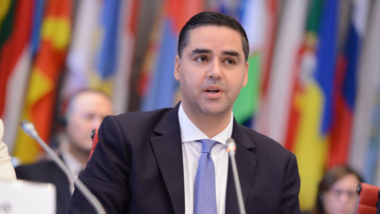
26 January 2024
Foreign Minister of Malta Ian Borg promises to ‘do whatever it takes’ to keep the OSCE ‘alive and functioning’ as he outlines 2024 OSCE priorities

05 December 2023
CSCE’s Peace Efforts in the Nagorno-Karabakh Conflict during the Czechoslovak Chairmanship in 1992

04 December 2023
Back from the brink: OSCE Ministerial Council in Skopje takes decisions on OSCE leadership
27 November 2023
Exclusive: OSCE Permanent Council paves the way for Malta to assume the OSCE chair in 2024
26 November 2023
Showdown in Skopje: Can We Still Cooperate?
16 November 2023
The Limits and Potential of Consensus in Times of Crisis
16 November 2023
Confidence Building in the Shadow of War: Moldova, Transdniestria, and the Uncertain Future of the 5+2 Process
16 November 2023
Is a Russian veto on leadership about to provoke the downfall of the OSCE?

09 November 2023
Nagorno-Karabakh: What Next?
06 November 2023
Exclusive: Malta under consideration to become OSCE Chair in 2024

Building Security Through Cooperation
The Security and Human Rights Monitor (SHRM) provides regular updates on topical developments relevant to the mandate of the Organisation for Security and Co-operation in Europe (OSCE). The publications on this website are meant to stimulate dialogue and debate and / or inform readers on issues related to security and human rights.
The publication of the Security and Human Rights Monitor is made possible through the generous financial support of the governments of Austria, Liechtenstein, and the Netherlands.
The major themes include:
- Conflict prevention
- Human Rights
- Minorities
- Democracy building
- Cooperative security